There is a cry coming from the villages. Not from the roads. Not from the offices. Not from the big meetings where people speak about development.
It is a cry beneath the soil.
A deep cry. A painful cry. A cry that has stayed hidden for too long.
We live in towns. We go to hospitals. We take our children to school. We sleep under safe roofs. We dream about a better life. We use products from factories every day. But have you ever stopped and asked yourself one painful question?
Is it true that so much of what supports life in the city begins in the village… yet the people in the village remain trapped in suffering?
That question can break your heart.
Because the truth is bitter.
I know a farmer who has been farming for more than 30 years. More than 30 years of waking up early. More than 30 years of sweating under the sun. More than 30 years of trusting the land.
And yet, his house is still covered with grass. Not because he loves that life. Not because he is lazy. Not because he has no dreams.
But because farming has been a losing journey for him.
I sat down with him. We did the calculations together. We looked at the money he spends on fertilizer, pesticides, labor, seeds, and time. We looked at everything.
And what did we find?
If farming was treated like a real job, his payment for one month would be less than Tshs. 40,000.
Less than Tshs. 40,000.
That is below 15 dollars.
Think about that. A man who has given more than three decades of his life to the soil… A man whose hands carry the weight of survival… A man whose work supports lives far beyond his own home…
And yet his monthly return is less than what many people spend in a single day without thinking.
How do you explain that?
How does a man work for 30 years and still remain in a grass-thatched house?
How?
I know another farmer. This one has been farming for more than 15 years. Every season, he must borrow money from loan sharks. The kind of lenders people call blood-dryers. People who lend money to the desperate, then collect from pain.
I asked him, “What are you really getting from this? Your children are not going to school properly. You buy inputs at very high prices. You keep enriching sellers. But what do you remain with?”
That question is hard. Because many farmers already know the answer.
They remain with exhaustion. They remain with debt. They remain with shame. They remain with pressure. They remain with silence.
And still the world keeps saying, “Farmers are poor.” “Small farmers cannot manage.” “Rural farmers are like this and like that.”
But do people really know the price farmers are paying?
Do they know what farmers lose just on inputs alone?
Do they know what happens when seeds do not perform well? When chemicals fail? When the wrong products are pushed into the wrong ecological zone? When money is spent, but results do not come?
Many people do not know. And maybe many do not want to know.
Because once you know the truth, you cannot stay comfortable.
Then you go to the market.
And that is where the pain becomes even heavier.
A woman farmer called me crying. She had harvested tomatoes. Her gross revenue was Tshs. 3,058,000.
At first, someone may think that sounds good.
But then reality begins to cut like a knife.
At the market, she paid Tshs. 310,500. For transport, she paid Tshs. 166,000. For agents or middlemen, Tshs. 270,000. For empty boxes, Tshs. 237,250. For cartons, Tshs. 75,000. For ropes, Tshs. 25,000. For offloading and labor, Tshs. 108,000. For harvesting, Tshs. 98,000.
Just like that, the cost of selling alone reached Tshs. 1,289,750.
Remove that from Tshs. 3,058,000.
What remains is about Tshs. 1,768,250.
Now remove the cost of seeds. Remove fertilizer. Remove pesticides. Remove labor. Remove tools. Remove all the invisible pain that happened before the tomatoes even reached the market.
Then ask yourself:
What is left for her?
What is left for school fees? What is left for medicine? What is left for rent or a decent house? What is left for dignity? What is left for hope?
And what if she had borrowed from a loan shark?
Then what?
How do you expect that woman to continue?
How do you expect her children to dream?
How do you expect farming communities to rise when the structure itself is built to drain them?
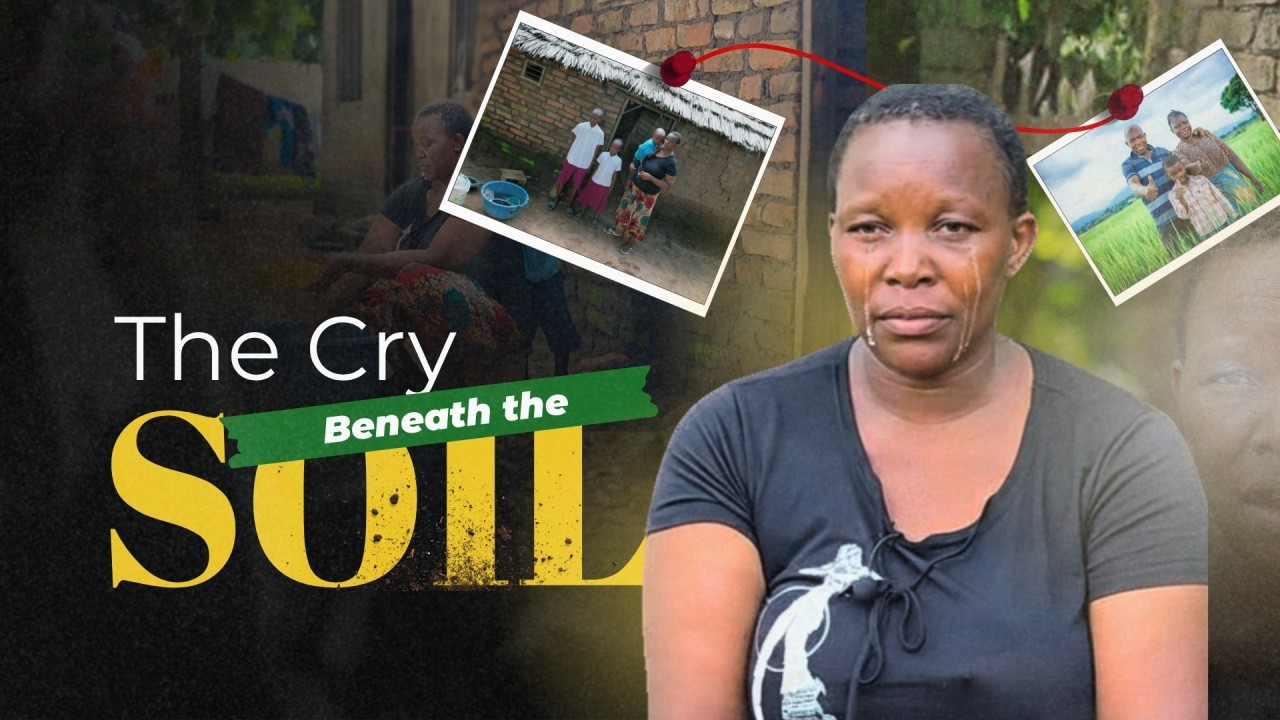
This is why the story in The Cry Beneath The Soil – Part 1 is not just a documentary. It is not just a video. It is not just content.
It is truth.
It is pain.
It is the hidden life of many farmers across Africa.
These are the people many call “backbone,” yet they live without good shelter. These are the people who carry entire value chains, yet many cannot afford proper treatment when they are sick. These are the people whose daily struggle feeds systems bigger than themselves, yet their own children miss school. These are the people who keep showing up season after season, but the system keeps taking and taking and taking.
This is not bad luck.
This is not a small mistake.
This is structural injustice.
From the way inputs are distributed… To the way advice is given… To the way products are sold… To the way markets are controlled… To the way middlemen take power… To the way finance excludes the farmer…
The farmer stands in the middle of a system that keeps speaking about help, but too often delivers suffering.
And we must say it clearly:
This is exploitation. This is oppression. This is unfairness wearing the clothes of normal business. This is cruelty that has been normalized for too long.
For years, projects have come and gone. Promises have come and gone. Meetings have come and gone. Words have come and gone.
But many farmers are still exactly where they were.
Still trapped. Still tired. Still carrying pain in silence.
Why?
Because you cannot change a farmer’s life with scattered solutions. You cannot solve deep pain with disconnected players. You cannot fix this with noise. You cannot fix this with pity. You cannot fix this by blaming the farmer.
What is needed is truth. What is needed is transparency. What is needed is a system that sees the farmer fully.
That is why there must be a different way.
That is why MazaoHub, integrated with CropSupply, brings a different light.
A light of visibility. A light of accountability. A light of structure. A light of dignity.
Through this vision, farms are treated like living systems that deserve care. That is why MazaoHub built what can be called hospitals for farms. A place where every stakeholder has a dashboard. A place where every farmer can understand their own numbers. A place where profit and loss can be seen clearly. A place where markets, banks, agrovets, manufacturers, distributors, and all players are no longer hidden behind confusion.
Because enough is enough.
We cannot keep watching farmers suffer in darkness while others keep growing rich from their ignorance. We cannot keep calling them poor while refusing to fix the structure that keeps them poor. We cannot keep speaking nice words while children in farming families miss school, miss treatment, and miss the chance for a better life.
The Cry Beneath The Soil is a painful reminder that behind every rural struggle is a human being. A father. A mother. A child. A family. A future.
And Part 1 is only the beginning.
The link for The Cry Beneath The Soil – Part 1 is below
https://www.youtube.com/watch?v=cMplGOn2vBA&t=558s

MAZAOHUB PRECISION AGRICULTURE INC.
US OFFICES : State of Delaware, Located at
8 The Green. Ste A, in the City of Dover,
County of Kent, Zip Code : 19901
TANZANIA OFFICES: PSPF Millenium Tower Phase 2,
19th Floor, Bagamoyo Road, Dar es Salaam.

HQ OFFICES : +255 699365987

Monday-Friday (9:00 AM - 5:00 PM)
Saturday and Sunday: Off